Renogy 200Ah 12V LiFePO4 Review UK 2026
Quick verdict
Score: 6.9/10
Best for: Maximum usable power, long life and low weight, if the budget allows
Not for: The tightest budgets, or charging from a lead-acid-only charger
Bottom line: A practical leisure battery (lithium (LiFePO4), 200Ah) for off-grid and leisure power.
The Renogy 200Ah 12V LiFePO4's 200Ah 12V LiFePO4 leisure battery is aimed at caravan, marine and solar or off-grid setups, using LiFePO4 chemistry with 200Ah capacity at a 12V nominal voltage. The product title claims 5000+ deep cycles, and it includes an IP65 rating plus BMS protection for dust resistance and basic weather exposure.
Key specifications
| Spec | Value Fitment |
|---|---|
| Total capacity | 200Ah Leisure systems |
| Voltage | 12V Caravan/boat |
| Protection | IP65, BMS Outdoors/solar |
Pros
- Lithium (LiFePO4) - most usable capacity and longest life
- 200Ah at 12V
- Suits caravan, marine, solar / off-grid
- Built-in BMS
- Lighter and faster-charging than lead-acid
Cons
- Higher upfront cost, and needs a lithium-profile charger
- Avoid charging below freezing without low-temp protection
- Match the capacity to your real daily power draw
Battery Type and Chemistry
Battery Type and Chemistry for this leisure battery setup is LiFePO4 (lithium iron phosphate), paired with a 12V system rating for leisure use. LiFePO4 is based on lithium cells with an internal Battery Management System (BMS) that manages charging and discharging limits. This chemistry is geared towards leisure applications such as caravan and boat use, with compatibility for solar and off-grid setups, rather than starter power. A key limitation remains the need for correct charging settings, as an incorrect match can reduce performance.
Capacity and Real Usable Power
Selecting a 12V LiFePO4 setup with a stated capacity of 200Ah provides a baseline for planning energy use, because higher amp-hours generally indicate more stored energy for loads such as lights, fridges, and charging small devices during off-grid or leisure trips. In real use, the usable portion is determined by how deeply the battery is discharged and how much power is drawn at once, since voltage can drop under load. For a 12V system, capacity expressed in amp-hours is energy in use, then becomes constrained by wiring losses, battery management protection cut-offs, and discharge limits based on a conservative operating approach. Buyers should assess peak draw and then match loads to the available usable energy.
Cycle Life and Durability
A 200Ah LiFePO4 setup can store more energy, but endurance is what matters for day-to-day trips and long-term value. The Renogy rates this lithium iron phosphate leisure battery for 5000+ deep cycles, which indicates cycle durability under repeated discharge and recharge. Durability depends on how consistently the battery is used, whether it is kept within safe charge limits and protected from harsh conditions. The IP65 rating and built-in BMS protection for caravan, boat and solar use add practical resilience against dust and water exposure. Still, long life depends on correct charging and use within realistic cycle expectations.
Fitting and Charging
Fitting and charging the Renogy 200Ah 12V LiFePO4 leisure battery setup begins with selecting a safe, stable mounting position, since it is intended for leisure applications such as caravan, boat, and solar or off-grid systems. The battery should be secured to reduce vibration and kept dry during routine use. Connections must be made with correct polarity, tightened enough to prevent heat build-up, while avoiding terminal strain. Charging then requires a compatible 12V charging source, following the charger instructions and the battery protection behaviour (BMS). If charging appears uneven or stops early, check the wiring and the battery state.
Who Is This For?
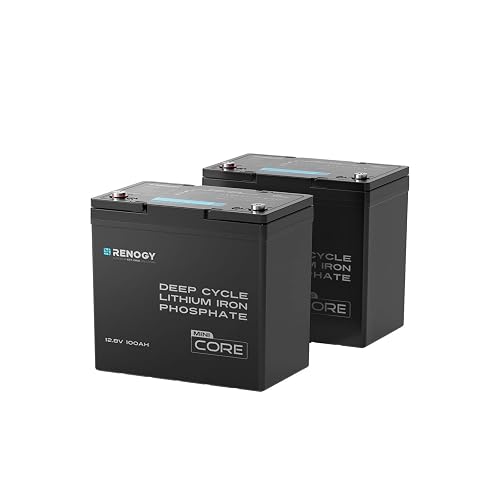
Considering the Renogy battery setup (a pair of 100Ah lithium batteries in one kit), it suits people who want a compact, leisure-focused 12V power source for caravan, boat, and solar or off-grid use, where battery protection and an IP65 rating matter. It fits households planning intermittent camping, seasonal storage, or weekend boating, since lithium chemistry is intended for frequent cycling. It also fits owners who already design around a 12V system and prefer packaged batteries rather than loose cells.
Where to Buy in the UK
For many buyers weighing the listed strengths and limits of the Renogy 200Ah 12V LiFePO4 battery (marketed as two 100Ah lithium batteries with IP65 and BMS protection for caravan, boat, and off-grid use), the next step is identifying a reliable UK buying route. Shoppers typically check major UK retailers and large marketplaces that support returns. They should confirm the listing matches the exact 2x100Ah 12V LiFePO4 format and that "IP65" and "BMS protection" are explicitly stated. Delivery options matter because batteries can be heavy, and shoppers also compare the total cost including any fees.
Frequently Asked Questions
Is the Renogy 200Ah 12V LiFePO4 worth it?
For powering caravan, marine, solar / off-grid, the Renogy (a lithium (LiFePO4) battery) rated at 200Ah does the job. The right choice depends on how much power you draw, how you charge, and your budget - lithium costs more upfront but lasts far longer and gives more usable capacity. Check the current Amazon UK price against the cost-per-cycle, not just the sticker.
What type of battery is the leisure battery?
The Renogy is a lithium (LiFePO4) battery. Lithium gives you far more usable capacity (you can safely use most of the rated Ah, versus roughly half on lead-acid), a much longer cycle life, faster charging and a fraction of the weight. It costs significantly more upfront, and needs a charger with a lithium profile, but the cost per usable cycle is usually lower over its life.
How much power does the leisure battery give?
This leisure battery is rated at 200Ah at 12V. Crucially, USABLE capacity is not the same as rated capacity: with lithium you can safely use most of it, but with lead-acid, AGM and gel you should only draw around half before recharging, or you'll shorten its life. So a 200Ah lead-acid battery gives roughly half that in day-to-day usable power. Size your battery to your actual daily draw with that in mind.
What is the Renogy suitable for?
The Renogy 200Ah 12V LiFePO4 is suited to caravan, marine, solar / off-grid. Deep-cycle leisure batteries are built to be discharged steadily over hours - running lights, a fridge, a water pump or electronics - and then recharged, which is different from a starter battery that gives a short, huge burst to crank an engine. Match the capacity to your typical daily power use and how long you go between charges.
What features does the leisure battery have?
This leisure battery offers built-in BMS. A built-in BMS (battery management system) protects a lithium battery against over-charge, over-discharge and short circuits, which is essential for safe lithium use. Match the features to how you'll use it.
How do you charge the Renogy?
The leisure battery needs a charger with a lithium (LiFePO4) profile - a standard lead-acid charger can under-charge or, worse, damage a lithium battery, and won't balance the cells correctly. Many people charge from a mains smart charger, a DC-to-DC charger from the vehicle alternator, and solar via an MPPT controller set to lithium. Never charge a lithium battery below freezing unless it has a heater or low-temperature protection.