SB S100 vs SuperBatt DT120
We compare the SB S100 and the SuperBatt DT120 across every dimension that matters - our scores, the key specs, and how each performs on the things you will actually notice day to day.

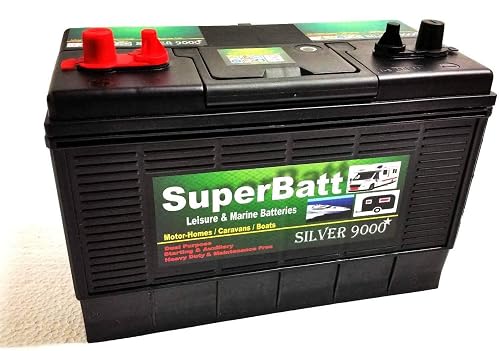
At a glance
| SB S100 | SuperBatt DT120 | |
|---|---|---|
| Our score | 9.4/10 | 9.3/10 |
| Best for | Dependable, affordable off-grid power for caravans, motorhomes and boats | Dependable, affordable off-grid power for caravans, motorhomes and boats |
| Not ideal for | Heavy daily cycling where lithium's longer life would pay back | Heavy daily cycling where lithium's longer life would pay back |
| Brand | SB | SuperBatt |
Battery Type and Chemistry
SB S100
Although the leisure battery is described as a "deep-cycle" battery, the product title does not specify the exact battery chemistry (for example lithium, AGM, or gel), so the chemistry type must be treated as unknown based on the available information. The title states it is a 12V, 100Ah deep-cycle leisure battery intended for caravan, motorhome, and marine boat use. This matters because charge behaviour, maintenance needs, and lifespan can vary by chemistry even when voltage and capacity match. Buyers should confirm the chemistry type with the seller or the accompanying documentation, then match the charger profile and wiring to the confirmed chemistry for safer operation and fewer charging surprises.
SuperBatt DT120
This leisure battery is a deep-cycle leisure battery built for dual-purpose marine use, with a rated 12V 120Ah capacity. It is positioned as a deep-cycle unit, meaning it is designed for repeated discharge and recharge for leisure loads, rather than short high-current starting use. Buyers should check the stated chemistry on the label or datasheet before matching a charger profile.
Capacity and Real Usable Power
SB S100
Capacity indicates the total energy the SB can store and therefore how long it can run a connected load before the battery requires recharging. The leisure battery is rated at 12V and 100Ah, so its storage is measured in amp-hours, which influences run time for a given device load. Usable power can be lower than headline capacity because some energy is held back as reserve and because real-world loads draw current at different rates. Buyers should assess expected current draw, then compare it against the 100Ah rating, keeping margins for real-world losses and wiring.
SuperBatt DT120
Capacity is one of the main figures buyers should focus on, because it affects how long a 12V leisure battery can run loads before recharging. The SuperBatt is a 12V, 120Ah deep-cycle leisure marine battery. Real usable power is determined by how deeply the battery is discharged, how steady the load is, and temperature. The 120Ah rating indicates higher stored energy, but the usable energy is lower once protection headroom is kept. For planning, expected amp draw needs to be matched to a conservative usable fraction, then recharge time has to be allowed for.
Cycle Life and Durability
SB S100
Cycle life and durability matter because they indicate how many charge-and-discharge cycles this leisure battery can complete before its usable performance drops, which affects how often it needs replacing. As a deep-cycle 12V, 100Ah leisure battery, it is designed for repeated use in caravan, motorhome and marine settings. The product title does not specify cycle counts, recharge limits or lifespan indicators, so those expectations are not confirmed. Cycle life depends on depth of discharge, charge completion and temperature exposure. Without published figures, the approach should be conservative, particularly where use involves frequent deep discharges or heat exposure.
SuperBatt DT120
Cycle life and durability matter because deep-cycle leisure batteries are designed to be discharged and recharged repeatedly, not just used for short bursts. For the leisure battery, the brand positions it as a heavy duty, ultra deep cycle, dual purpose leisure marine unit, which indicates an internal design intended for repeated cycling rather than short cranking-style use. Cycle life depends on how deeply the battery is discharged each time, and on how consistently charging is completed afterward. Keeping the battery within its intended use helps reduce capacity fade over time. Actual lifespan also depends on load conditions, temperature, and maintenance habits, but these specifics are not provided.
Fitting and Charging
SB S100
For a deep-cycle 12V, 100Ah leisure battery such as the SB S100, fitting and charging planning starts with safe installation and correct charge handling, because faults at the installation stage can reduce service life even when the battery is made for caravan, motorhome, and marine use. The battery is mounted securely in the available space, with terminals kept dry and protected. Cable connections are made with correct polarity, and fittings are tightened properly to help minimise heat build-up. During charging, a compatible charger for leisure batteries is used, and overcharging is avoided by monitoring charge behaviour. When the battery is left unused, periodic top-ups are scheduled, because long gaps can lead to loss of capacity.
SuperBatt DT120
When fitting the SuperBatt in a UK leisure or marine setup, careful planning helps prevent charging problems and unsafe connections, because dual purpose batteries still need correct wiring and ventilation. The installer should mount it securely, then check cable gauge and polarity, especially with twin posts and dual terminals. Next, they connect the positive and negative leads tightly, using clean, corrosion-resistant connections, and route cables away from heat. Ventilation gaps should remain clear, and the charge indicator should be visible for quick checks. During charging, they match the charger settings to a 12V battery and avoid overvoltage, since heat buildup can reduce long-term performance.
Who Is This For?
SB S100
This deep-cycle 12V 100Ah SB S100 leisure battery is suited to caravan, motorhome, and marine setups where steady power draw is expected over longer periods. It is aimed at replacing an existing 12V battery or building a new leisure power system, with 100Ah capacity listed as the key figure. The deep-cycle description aligns with repeated discharge and recharge use patterns, rather than the short, high-burst performance expected from a starter battery. Buyers who need to confirm compatibility with existing wiring should verify the required fitment, since no installation details are provided in the product information shown. It is not positioned as a starter-style battery, because the emphasis is on leisure use rather than cranking output.
SuperBatt DT120
The leisure battery is a suitable option for UK leisure and marine users who want a 12V, 120Ah deep-cycle dual-purpose battery with dual terminals (twin posts). The twin-post layout suits installations where separate cable routes are already planned, helping keep wiring cleaner and making service access easier. It also fits boat and caravan owners who prefer a single battery for both leisure loads and general use. Buyers should check their charging system details before fitting.
SB S100: pros
- Deep-cycle leisure battery
- 100Ah at 12V
- Suits caravan, motorhome, marine
- Proven, affordable off-grid power
Cons
- Only around half the rated capacity is safely usable
- Heavier and shorter cycle life than lithium
- Match the capacity to your real daily power draw
SuperBatt DT120: pros
- Deep-cycle leisure battery
- 120Ah at 12V
- Suits marine
- Dual purpose (start + leisure)
- Proven, affordable off-grid power
Cons
- Only around half the rated capacity is safely usable
- Heavier and shorter cycle life than lithium
- Match the capacity to your real daily power draw
Our verdict
Our pick is the SB S100 (our score 9.4/10) - A practical leisure battery (deep-cycle, 100Ah) for off-grid and leisure power. The SuperBatt DT120 is still worth it if it is cheaper when you check, or if it better matches your specific needs.